Understanding Concrete Compressive Strength Classes
Concrete Compressive Strength: When designing a commercial structure, warehouse, or industrial flooring system, one of the most critical decisions an engineer makes is determining the required concrete compressive strength. This strength, measured in pounds per square inch (PSI) or Megapascals (MPa), determines how much load a structure can bear before failing.
Choosing the wrong strength class can lead to structural failure, costly repairs, or premature degradation of the surface. This guide will break down the common concrete strength classes and help you determine which is appropriate for your commercial project.
What is Concrete Compressive Strength?
Compressive strength is the capacity of a material to withstand loads tending to reduce size, as opposed to tensile strength, which withstands loads tending to elongate. In concrete, this strength develops through the hydration process of cement over time, typically measured at 7, 14, and 28 days.
Common Concrete Strength Classes for Commercial Use
Concrete strength is categorized based on its application. Here are the common classes you will encounter in industrial construction:
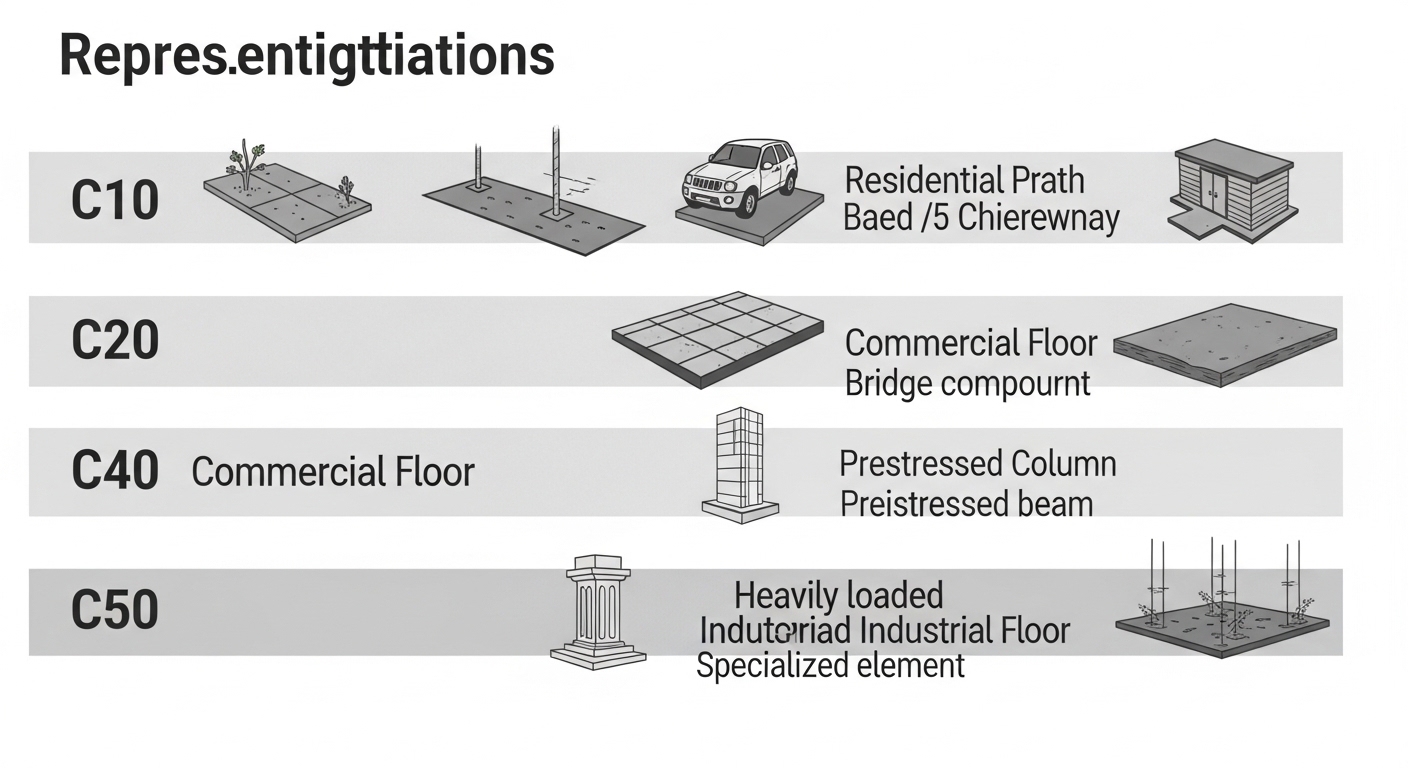
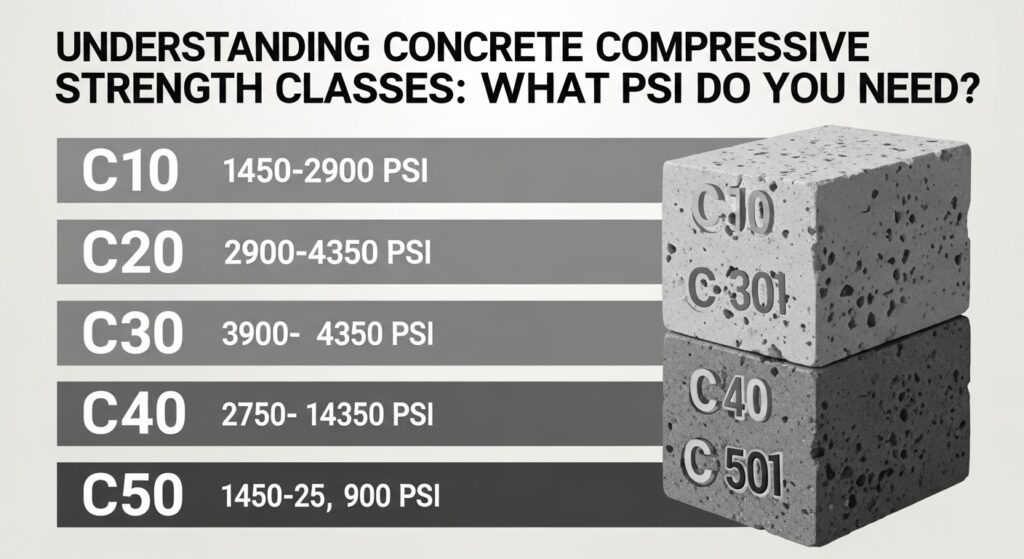
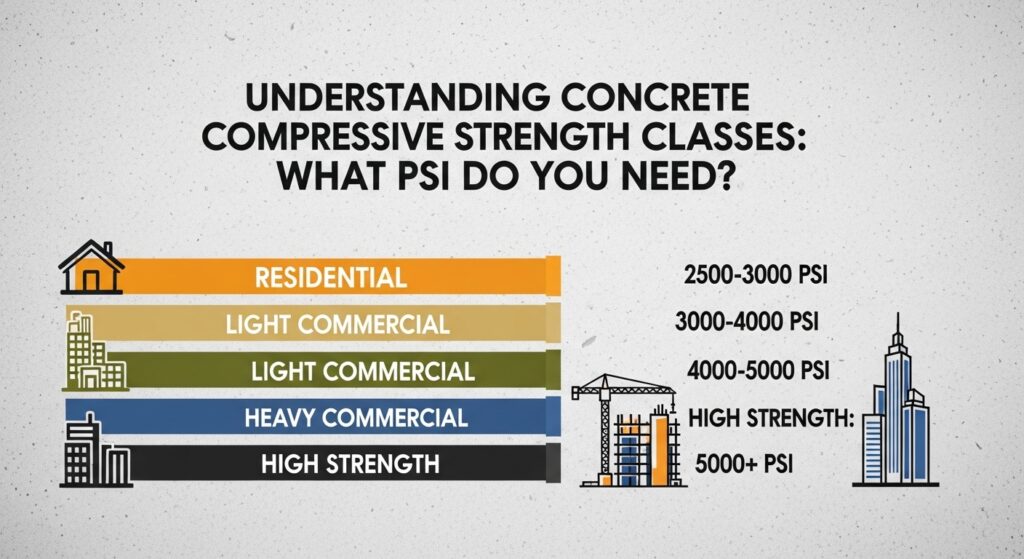
| Strength Class (PSI) | Typical Use Cases | Characteristics |
| 2,500 – 3,000 | Lightweight footings, interior slab-on-grade | Low load, cost-effective |
| 3,500 – 4,000 | Standard commercial slabs, driveways, sidewalks | Moderate load, durable |
| 4,500 – 5,000 | Heavy-duty industrial floors, parking garages | High durability, abrasion resistance |
| 6,000+ | High-rise columns, bridges, specialized foundations | Maximum load-bearing capacity |
Factors Influencing Concrete Strength
Achieving the required strength depends on more than just ordering the right mix; it relies heavily on proper handling and environmental conditions.
- Water-Cement Ratio: This is the most crucial factor. More water makes concrete easier to pour but significantly reduces its final strength and durability.
- Curing Process: Concrete needs moisture to hydrate properly. Improper curing—allowing the concrete to dry too fast—can reduce strength by up to 50%.
- Aggregate Quality: The strength of the stone and sand used in the mix directly impacts the overall strength of the concrete slab.
How to Determine the Required PSI
To determine the necessary strength class, you must consider:
- Load Type: Is this for heavy machinery, forklifts, or just pedestrian traffic?
- Abrasion Resistance: Will the floor be subjected to heavy friction?
- Environmental Exposure: Will the concrete be exposed to freeze-thaw cycles or chemical spills?
Pro Tip: Always consult a licensed Structural Engineer to determine the required specifications for your project.
Conclusion
Selecting the correct concrete strength class is a balance between structural necessity, durability requirements, and budget. While higher PSI concrete costs more, it often provides better long-term value for industrial applications by reducing maintenance and extending the life of the structure.