Concrete vs. Asphalt Driveways: Which is the Best Investment for Your Home?
Concrete vs. Asphalt Driveways: Choosing the right material for your driveway is a decision that affects your home’s curb appeal, maintenance schedule, and resale value for decades. The two most popular choices—concrete and asphalt—each offer distinct advantages and drawbacks.
While asphalt is often praised for its lower upfront cost, concrete is celebrated for its longevity and aesthetic versatility. In this comprehensive guide, we break down the differences in cost, durability, maintenance, and climate suitability to help you decide which is the best investment for your property.
1. Installation and Upfront Cost
For many homeowners, the initial price tag is the deciding factor.
Asphalt: The Budget-Friendly Choice
Asphalt is generally cheaper to install than concrete. On average, an asphalt driveway costs between $7 and $13 per square foot. The installation process is also faster; because asphalt is a petroleum-based product that hardens as it cools, it can often be driven on within 24 to 48 hours.
Concrete: The Premium Investment
Concrete is more labor-intensive and requires more expensive raw materials. You can expect to pay between $10 and $18 per square foot for a standard pour, and significantly more for decorative or stamped finishes. Furthermore, concrete requires a 7-day curing period before it can support the weight of a vehicle.
2. Lifespan and Durability
When it comes to longevity, concrete is the clear winner.
- Concrete Lifespan: A professionally installed concrete driveway can last 30 to 50 years. It is highly resistant to heavy loads and does not soften in high temperatures.
- Asphalt Lifespan: Asphalt typically lasts 15 to 20 years. Because it is a flexible (viscous) material, it is prone to “rutting” or sagging over time if the subgrade isn’t perfectly compacted.
3. Maintenance and Repairs
This is where the long-term “hidden” costs of a driveway come into play.
Maintenance of Asphalt
Asphalt requires a lot of “TLC.” To prevent it from becoming brittle and cracking, it must be sealcoated every 2 to 5 years. However, when cracks do appear, they are very easy and cheap to fix with DIY crack fillers.
Maintenance of Concrete
Concrete is relatively low-maintenance. Beyond occasional power washing and resealing every 5 years to prevent staining, it doesn’t require much work. However, if concrete does crack or heave, it is much more difficult and expensive to repair seamlessly than asphalt.
4. Climate Suitability
Your geographic location should play a major role in your choice.
| Feature | Concrete | Asphalt |
| High Heat | Best. Does not soften or get “sticky.” | Poor. Can soften and track oils into the house. |
| Freezing Cold | Moderate. Prone to frost heave and salt damage. | Best. Flexible nature resists cracking in deep freezes. |
| Snow Removal | Excellent. Smooth surface is easy to plow/shovel. | Good. Dark color helps melt snow faster. |
5. Aesthetics and Curb Appeal
If you want your home to stand out, concrete offers far more options.
- Concrete Versatility: You are not limited to “boring gray.” With stamped concrete, you can mimic the look of brick, slate, or cobblestone. You can also use integral colors or stains to match your home’s exterior.
- Asphalt Limits: You are generally limited to black or dark gray. While “stamped asphalt” exists, it is rare and lacks the high-end feel of decorative concrete.
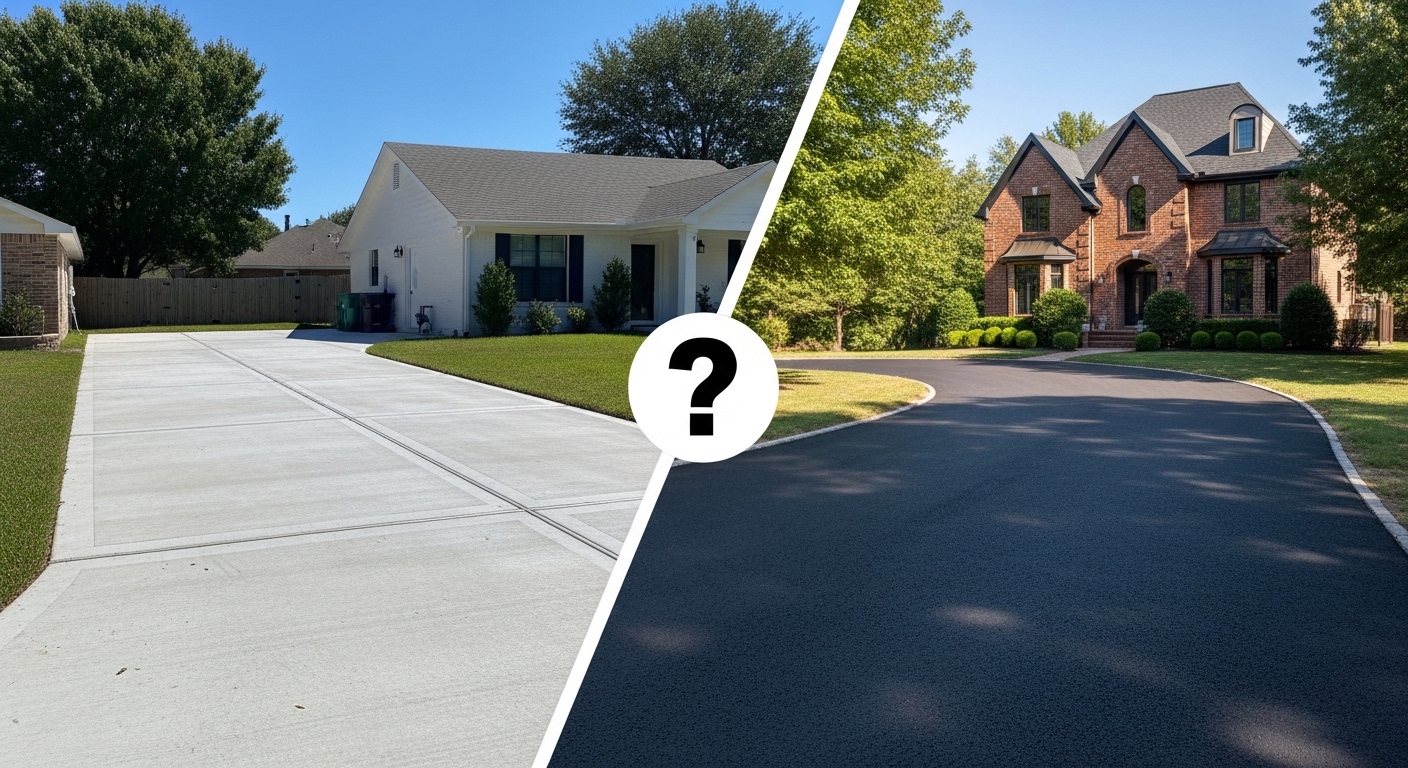
[Image: Side-by-side comparison of a stamped concrete driveway and a fresh asphalt driveway]
6. Resale Value
Real estate experts generally agree that concrete driveways provide a higher return on investment (ROI). A well-maintained concrete driveway signals to a buyer that the home has been cared for with high-quality materials. It adds a “permanent” feel to the landscape that asphalt often lacks.
7. Environmental Impact
- Asphalt: Is 100% recyclable, but the production involves petroleum and high heat, releasing VOCs (volatile organic compounds).
- Concrete: While cement production has a high carbon footprint, concrete driveways can be made more sustainable using fly ash or recycled aggregates (see our article on Sustainable Concrete Technology).
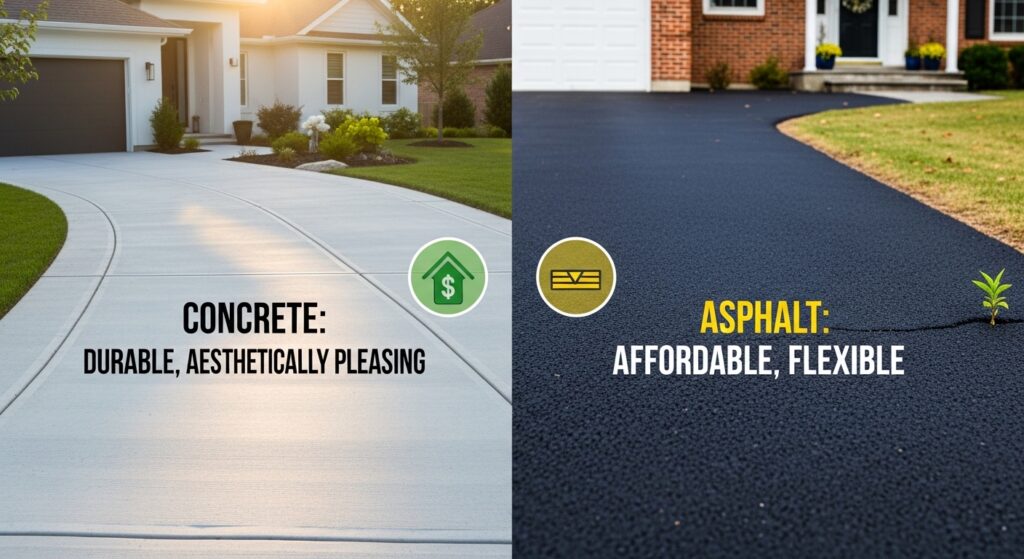
Final Verdict: Which Should You Choose?
Choose Asphalt If:
- You are on a tight budget.
- You live in a very cold climate with harsh winters.
- You don’t mind performing regular maintenance (sealcoating).
Choose Concrete If:
- You want a “one-and-done” solution that lasts 40+ years.
- You want to increase your home’s resale value.
- You live in a hot climate.
- You want a custom, decorative look.