The Future of Concrete: Self-Healing and Sustainable Mixtures
Concrete is the backbone of modern civilization, yet its traditional production method is environmentally taxing, contributing significantly to global $CO_2$ emissions. Furthermore, concrete is prone to cracking, leading to expensive maintenance and reduced lifespan.
The future of construction lies in intelligent materials that are both environmentally friendly and capable of autonomous repair. This article explores the cutting-edge innovations transforming concrete from a static building material into a dynamic, smart system.
1. Self-Healing Concrete: The End of Cracks?
Imagine a structure that fixes its own cracks without human intervention. This is no longer science fiction.
How Bacterial Concrete Works
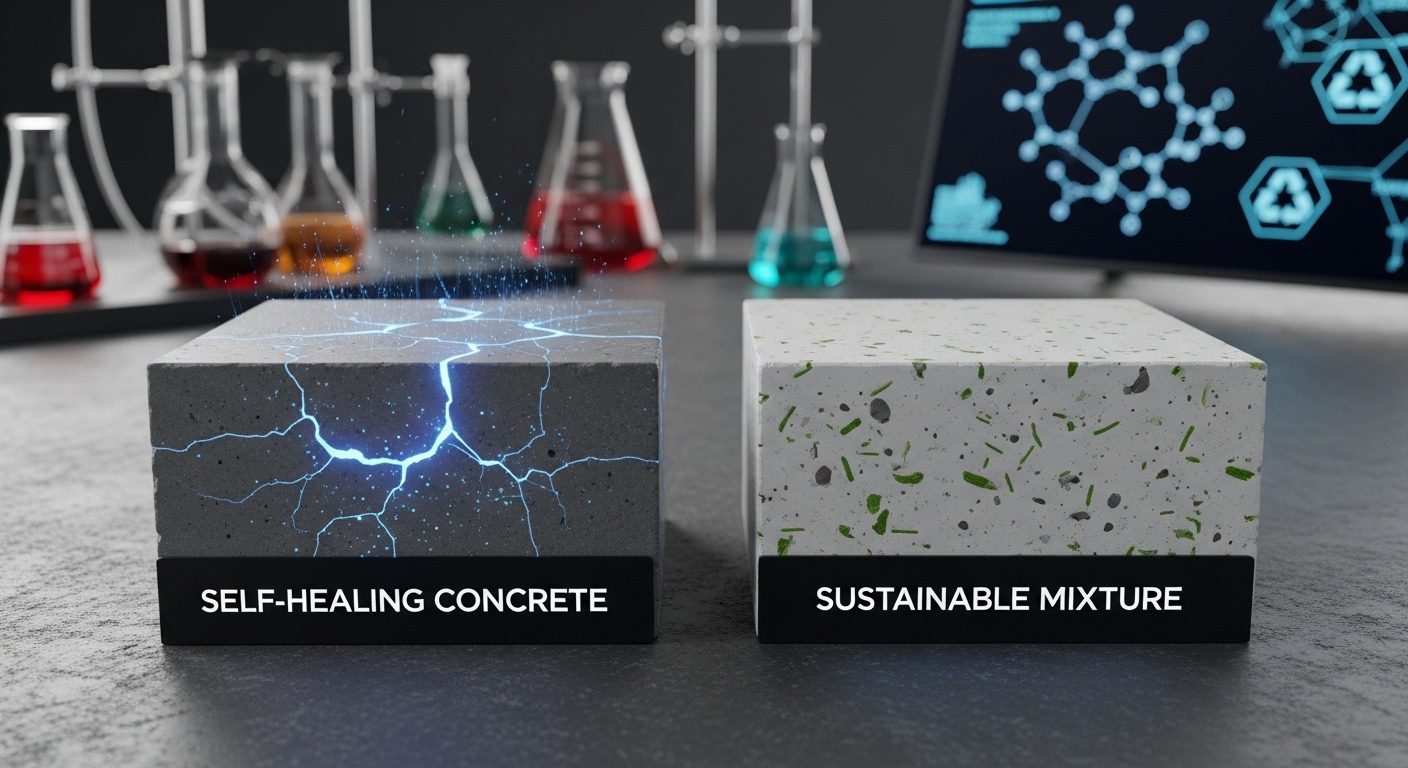
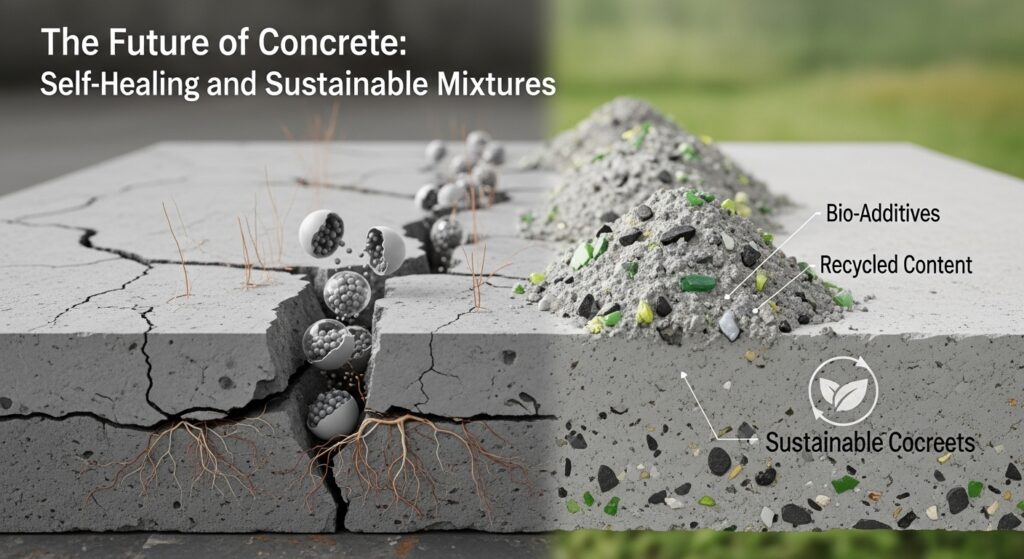
Researchers have developed concrete infused with dormant bacteria spores (specifically species like Bacillus) and capsules containing calcium lactate.
- Cracking: When a crack forms, water and oxygen enter the concrete.
- Activation: The water activates the dormant bacteria.
- Healing: The bacteria consume the calcium lactate and produce limestone ($CaCO_3$), which fills the crack completely.
2. Sustainable Mixtures: Reducing the Carbon Footprint
The primary environmental impact of concrete comes from the production of cement. New technologies aim to replace cement with greener alternatives.
- Supplementary Cementitious Materials (SCMs): Using industrial by-products like fly ash (from coal plants) or slag (from steel production) to replace a portion of the cement clinker.
- Limestone Calcined Clay Cement (LC3): A new type of cement that replaces up to 50% of traditional clinker with calcined clay and limestone, reducing emissions by up to 40%.
- Geopolymer Concrete: Utilizing waste materials like fly ash and activating them with chemicals, eliminating the need for cement entirely.
3. Carbon Capture and Utilization (CCU)
Instead of just reducing emissions, the future of concrete involves actively removing $CO_2$ from the atmosphere.
CarbonCure Technology
This technology involves injecting captured $CO_2$ into concrete during the mixing process. The $CO_2$ mineralizes and becomes permanently trapped within the concrete, while simultaneously increasing the concrete’s compressive strength.
4. The Challenges of Implementation
While promising, adopting these new technologies faces barriers:
- Cost: Self-healing concrete is currently more expensive to produce than traditional concrete.
- Standardization: Building codes need to catch up to approve these new materials for structural use.
Conclusion
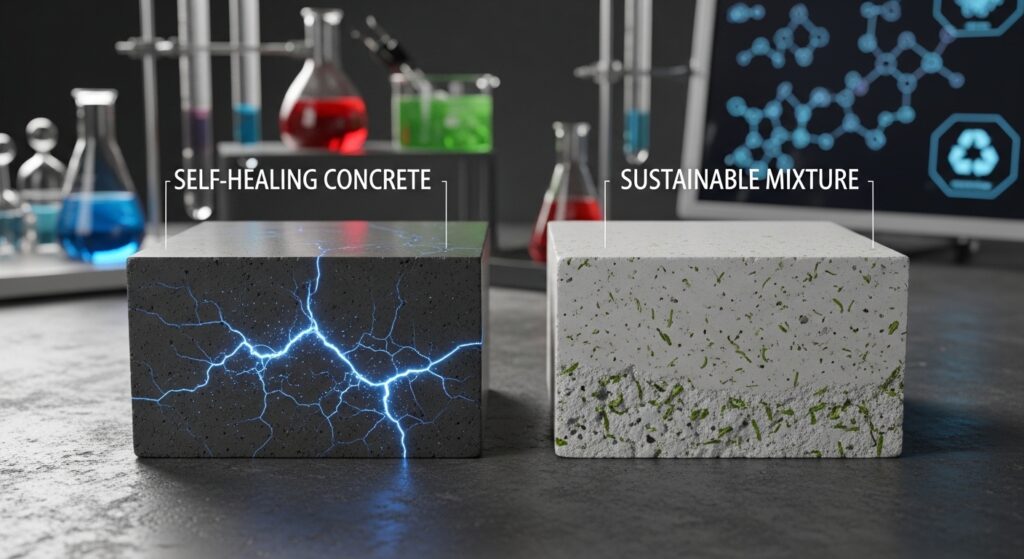
The shift toward self-healing and sustainable concrete is inevitable. As the construction industry faces pressure to reduce its environmental impact, technologies like bacterial concrete and carbon capture will become the new standard, ensuring our infrastructure is both durable and eco-friendly.