The Role of Precast Concrete in Modern Infrastructure Projects
The Role of Precast Concrete in Modern Infrastructure Projects: Infrastructure is the backbone of economic growth and societal functionality. From bridges and highways to sewage systems and high-rise buildings, the demand for durable, efficient, and cost-effective construction materials has never been higher. While traditional cast-in-place concrete has long been the standard, precast concrete has rapidly emerged as the superior choice for modern infrastructure projects.
By shifting the construction process from a chaotic job site to a controlled factory environment, precast concrete offers unparalleled advantages in quality, speed, and sustainability. This article explores how precast concrete is redefining the construction landscape.
What is Precast Concrete?
Precast concrete is a form of construction where concrete is cast in a reusable mold or “form,” cured in a controlled environment (usually a factory), and then transported to the construction site to be lifted into place.
Unlike cast-in-place concrete, which is poured into forms directly at the final location of the structure, precast concrete is manufactured off-site. This technological shift allows for precision engineering and stringent quality control that is impossible to achieve on a typical construction site.
Unmatched Quality Control and Precision
The primary advantage of precast concrete in infrastructure projects is the consistency of the final product.
Factory-Controlled Environment
Factory production eliminates the unpredictable variables of the construction site. Engineers can strictly control:
- Temperature and Humidity: Essential for proper hydration and curing.
- Mix Proportions: Precise measurement of cement, water, and aggregates ensures consistent compressive strength.
- Placement of Reinforcement: Rebar and prestressing strands are positioned with micrometer precision.
Durability and Longevity
Because of this control, precast concrete structures often exhibit superior durability. They are less prone to cracking, spalling, and deterioration caused by environmental factors like freeze-thaw cycles or chemical exposure. In industrial infrastructure, this longevity translates directly to lower lifecycle costs and reduced maintenance needs.
Speed of Construction: The Modular Advantage
Modern infrastructure projects are under immense pressure to minimize disruption to the public and reduce total project timelines. Precast concrete is the ultimate tool for accelerating construction schedules.
Concurrent Operations
While the foundation is being prepared on-site, the structural components are simultaneously being manufactured in the factory. This concurrent workflow reduces total project duration by weeks or even months.
Faster Installation
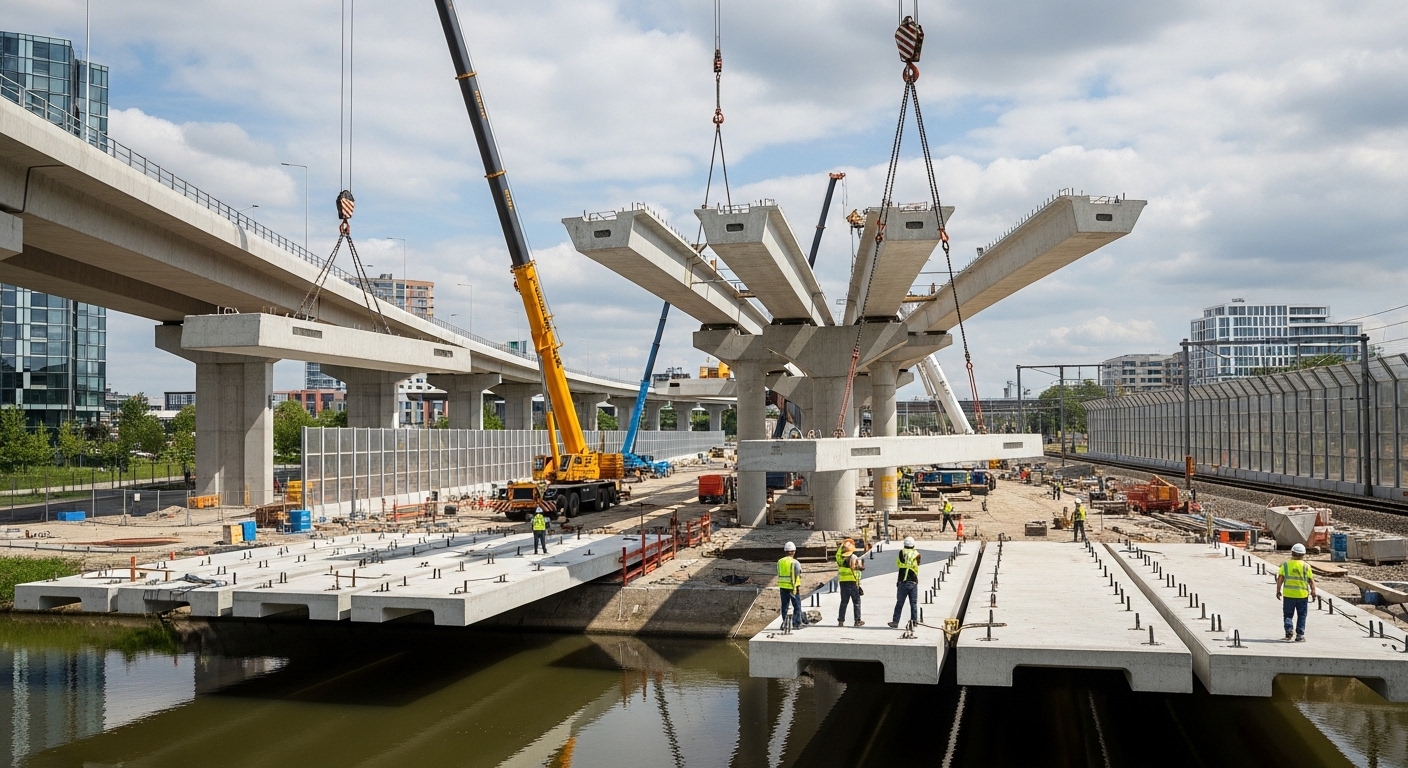
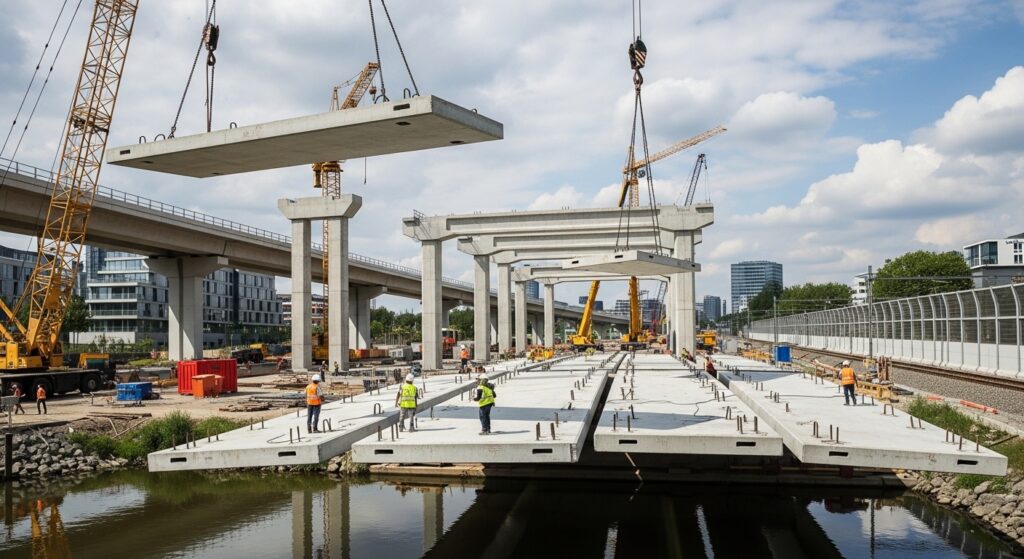
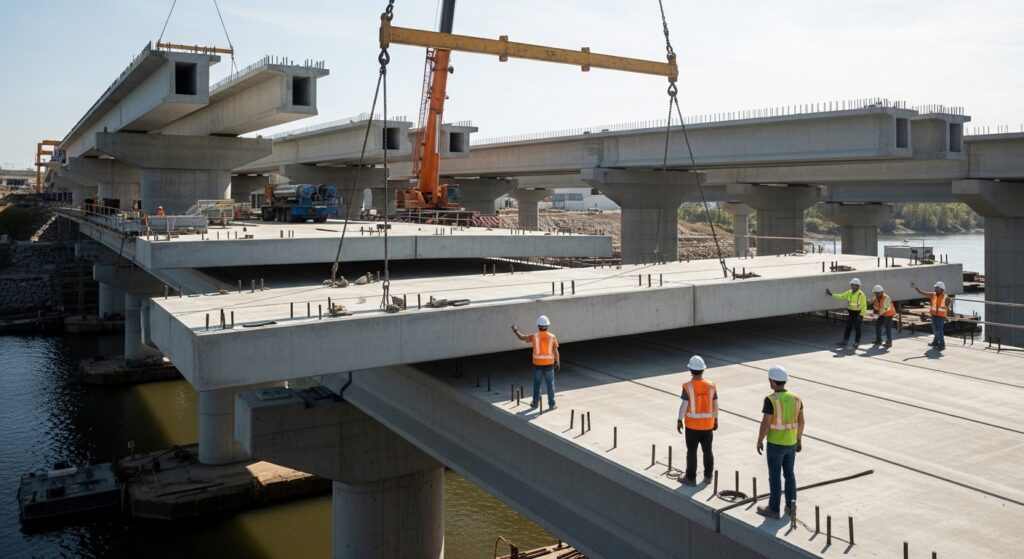
Once the site is ready, precast components are delivered and erected using cranes. There is no need to wait for concrete to cure on-site, which allows for immediate loading of the structure.
- Bridges: Bridge girders and deck panels can be installed overnight, minimizing traffic closures.
- Culverts and Pipe Systems: Precast box culverts can be installed in a matter of hours, restoring access to roads quickly.
Cost-Effectiveness and Economic Efficiency
While the initial cost of manufacturing precast components might seem high, the overall project cost is often lower when considering the entire lifecycle.
Reduced Labor Costs
Factory labor is generally more efficient than site labor. Workers specialize in specific tasks, utilizing specialized tools and automated machinery to produce components faster and with less waste.
Lower Maintenance and Liability
Due to the high quality and durability mentioned earlier, precast structures require significantly less maintenance over their lifespan. This reduces long-term operational costs for municipalities and private infrastructure owners.
Minimal Waste
Factory production allows for precise material usage. Molds are reused hundreds of times, and waste concrete is often recycled on-site for other uses, leading to a much lower environmental footprint compared to the material waste typical on construction sites.
Sustainability in Infrastructure
As the world pushes toward greener construction practices, precast concrete offers several sustainable solutions.
High-Performance Mixes
Precast factories can easily incorporate Supplementary Cementitious Materials (SCMs) like fly ash, slag, and silica fume. These materials reduce the carbon footprint of the concrete while improving its technical performance.
Structural Efficiency
Precast elements are often designed to be thinner or lighter than their cast-in-place counterparts while maintaining the same structural capacity. This reduces the amount of raw materials needed for the project.
Common Applications of Precast Concrete
Precast concrete is incredibly versatile, fitting into almost every facet of infrastructure development:
- Transportation: Bridge girders, deck panels, retaining walls, sound barriers, and modular tunnel segments.
- Water Management: Box culverts, pipes, manholes, and stormwater detention tanks.
- Commercial/Industrial: Modular structural frames, wall panels, floor slabs, and foundation piles.
- Utilities: Transformer vaults, underground utility conduits, and light pole bases.
The Future: Integrating Technology
The role of precast concrete is evolving with technological advancements. Building Information Modeling (BIM) is now standard in the precast industry, allowing engineers to visualize the assembly of components before they are cast.
Furthermore, innovations in prestressing technology allow for longer spans and lighter structures, opening up new possibilities for architectural design in infrastructure projects.
Conclusion
Precast concrete is no longer just an alternative; it is the industry standard for modern infrastructure. Its ability to provide high-quality, durable, and cost-effective solutions while adhering to tight schedules and environmental standards makes it indispensable.
As urban areas continue to grow and infrastructure ages, the reliance on precast technology will only increase, driving efficiency and sustainability in the built environment.