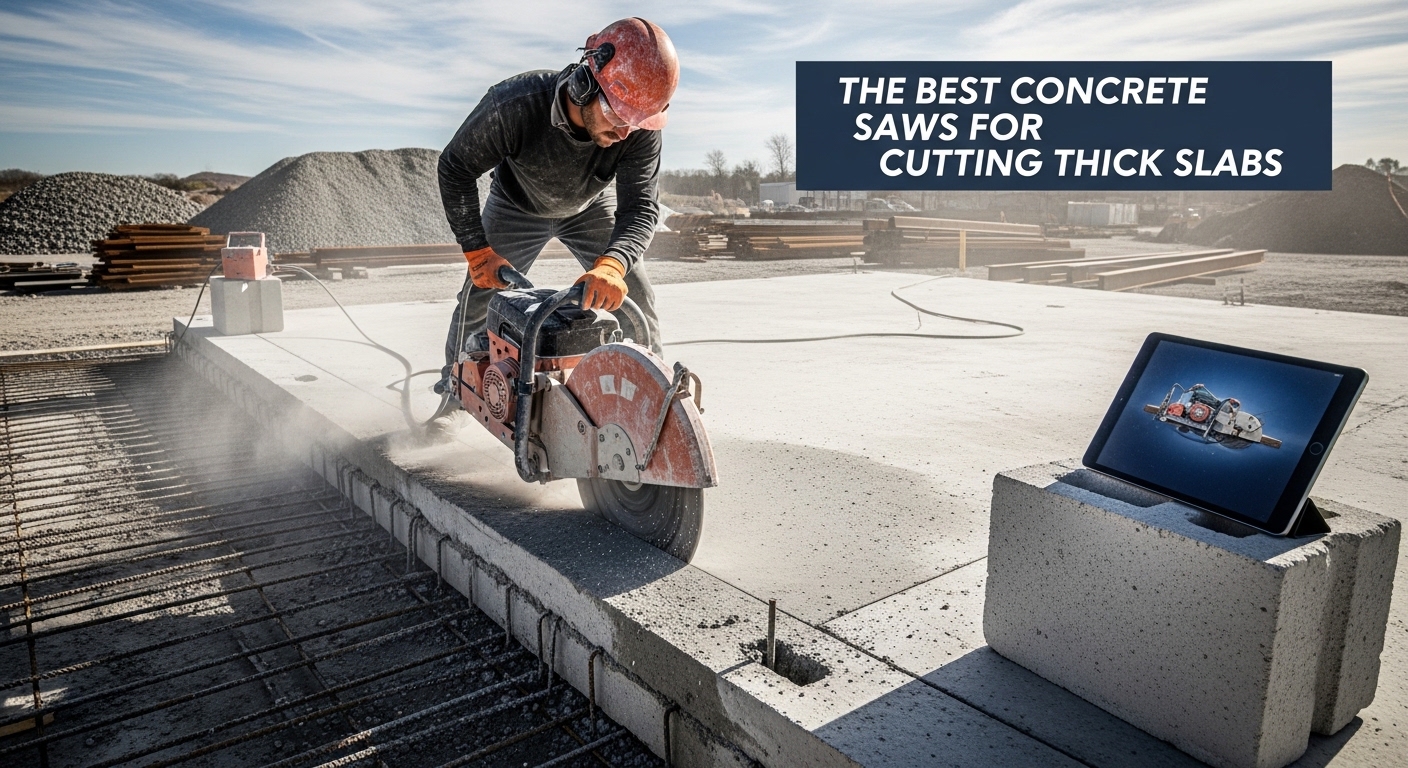
The Best Concrete Saws for Cutting Thick Slabs
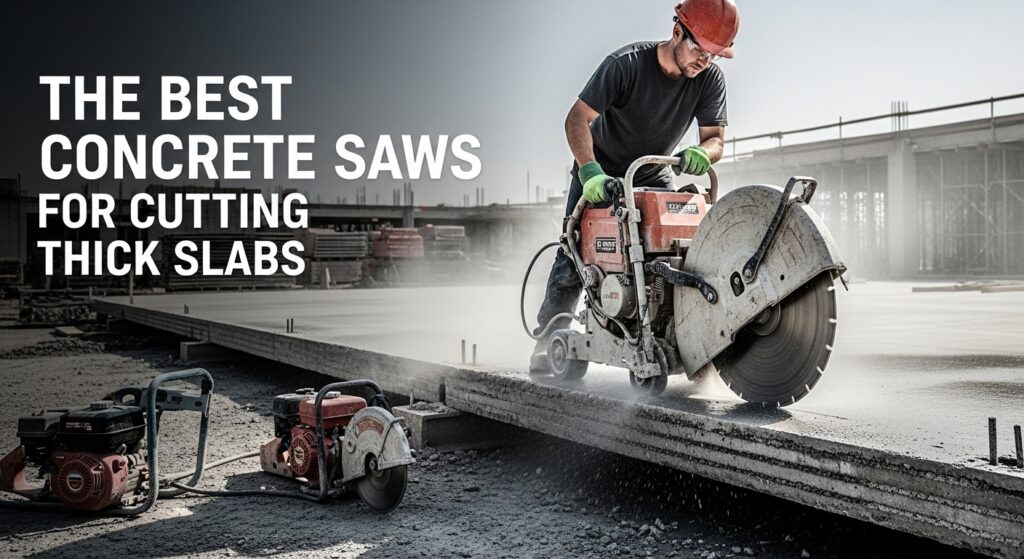
The Best Concrete Saws for Cutting Thick Slabs: Cutting through thick concrete slabs—whether for demolition, installing new plumbing, or creating expansion joints—requires more than just power; it requires precision, durability, and the right tool for the job. Using the wrong saw can lead to broken blades, burnt-out motors, and dangerous accidents.
From industrial-grade walk-behind saws to specialized handheld saws, choosing the right equipment depends heavily on the depth of the slab and the scale of the project. In this guide, we analyze the top concrete saws designed to handle thick slabs efficiently.
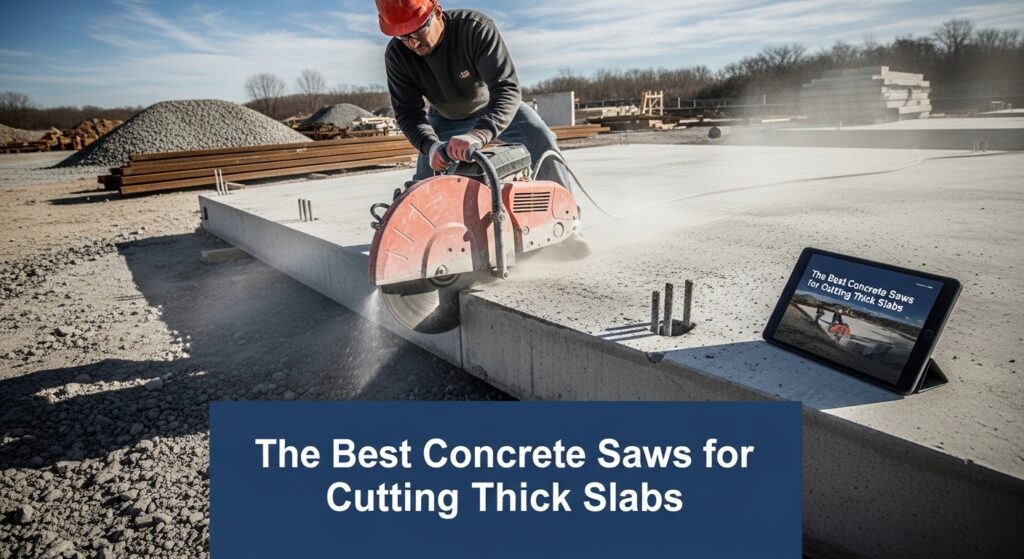
Factors to Consider When Selecting a Concrete Saw
Before investing in a saw, you must understand the demands of your project.
1. Slab Thickness and Cutting Depth
The thickness of the concrete determines the blade diameter needed. A general rule is that the maximum cutting depth is about one-third to two-fifths of the blade diameter. For a 10-inch thick slab, you will need a saw that can accommodate at least a 24-inch or 30-inch blade.
2. Power Source
- Gasoline: High power, maximum portability, but produces fumes (not for indoor use without ventilation).
- Electric: Quiet, emission-free (great for indoors), but restricted by cord length or battery life.
- Hydraulic: Extremely powerful, ideal for heavy-duty industrial demolition.
3. Wet vs. Dry Cutting
For thick slabs, wet cutting is mandatory. Water cools the diamond blade, prevents overheating, and suppresses harmful silica dust. Ensure your saw has a reliable water connection hookup.
Top Concrete Saws for Thick Slabs
Here are our top picks based on power, reliability, and cutting depth capacity.
1. Best Overall Walk-Behind Saw: Husqvarna FS 5000 Series
For heavy-duty commercial work, walk-behind saws are unrivaled. The Husqvarna FS 5000 series is designed to handle slabs up to 12 inches thick with ease.
- Pros: Highly ergonomic, low vibrations, excellent power-to-weight ratio.
- Ideal For: Large industrial floor projects and highway construction.
- Why it handles thick slabs: Features high torque and a large fuel tank for long, uninterrupted cuts.
2. Best Heavy-Duty Handheld Saw: Stihl TS 800
When you need versatility or cannot use a large walk-behind machine, the Stihl TS 800 is the industry standard for a handheld gas saw.
- Pros: Exceptionally powerful engine, advanced anti-vibration system.
- Ideal For: Cutting deep into thick slabs in tight spaces or demolition work.
- Why it handles thick slabs: Accepts up to a 16-inch blade, providing a maximum cutting depth of approximately 5.7 inches (note: for slabs thicker than this, a walk-behind saw is necessary).
3. Best Electric Saw for Indoors: Husqvarna K 7000
For indoor demolition where fumes are not allowed, the high-frequency electric K 7000 is powerful enough to compete with gas saws.
- Pros: Zero emissions, low noise, high power output.
- Ideal For: Shopping malls, hospitals, and underground parking structures.
- Why it handles thick slabs: Offers immense cutting power when paired with the right power pack, accepting up to 16-inch blades.
4. Best Hydraulic Saw: ICS 890 Series
For extreme thick-slab demolition, hydraulic chain saws allow you to make deep, square cuts without over-cutting corners.
- Pros: Unmatched cutting depth (up to 25 inches) with a single tool.
- Ideal For: Cutting deep utility trenches or demolition of massive foundations.
- Why it handles thick slabs: Uses specialized diamond chains that cut through reinforced concrete at extreme depths.
Essential Blade Selection for Thick Concrete
A saw is only as good as the blade attached to it. For thick slabs, you must use high-quality diamond blades.
| Blade Type | Application |
| Soft Bond Blade | Used for cutting hard concrete (prevents glazing). |
| Hard Bond Blade | Used for cutting soft/abrasive concrete (prevents premature wear). |
| Reinforced Concrete Blade | Features specialized segments to cut through steel rebar without snagging. |
Pro Tip: Always check the RPM rating of the blade to ensure it matches the saw’s speed.
Maintenance and Safety Tips
Cutting thick concrete is hazardous. Follow these protocols to ensure safety and tool longevity.
- Silica Dust Protection: Silica dust is a major health hazard. Always use wet cutting methods and wear appropriate respiratory protection (N95 or higher).
- Blade Inspection: Before every use, inspect the blade for cracks, missing segments, or warping.
- Engine Maintenance: For gas saws, check air filters and spark plugs regularly. Concrete dust is highly abrasive and will ruin an engine quickly if it enters the intake.
- Gearbox Lubrication: Regularly check the gearbox oil to prevent overheating during long, deep cuts.
Conclusion
Investing in the right concrete saw depends on the scale of your project. For daily, high-volume cuts in thick industrial slabs, a gasoline or hydraulic walk-behind saw is necessary. For versatility and smaller, deep cuts, a heavy-duty handheld gas saw like the Stihl TS 800 is the ideal choice. Remember that safety and proper maintenance are just as important as the tool itself.